
Why Is a Noun Important in English?
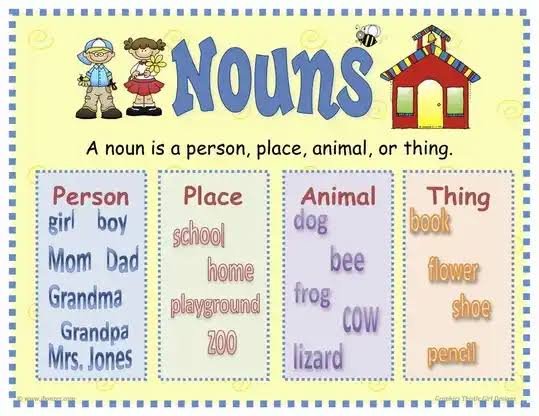
Nouns are very important in English grammar because they help us name people, places, things, animals, and ideas. Without nouns, it would be hard to speak or write clearly. They are used in almost every sentence, so every learner should understand them well. In addition, nouns help us make complete and meaningful sentences. They also make it easier to identify the subject and object of a sentence. As a result, learning nouns can improve grammar, writing, reading, and speaking skills. That is why nouns are an important topic for beginners.
Types of Nouns in English Grammar
There are many types of nouns in English grammar, and each type has its own use. Some nouns name specific people or places, while others name things, groups, feelings, or ideas. Because of this, it is important to learn the main types of nouns one by one. The most common types are:
- Proper Noun
- Common Noun
- Collective Noun
- Abstract Noun
- Concrete Noun
- Countable Noun
- Uncountable Noun
Now, let us understand each type with simple definitions and examples.
Proper Noun
A proper noun is the special name of a person, place, or thing. It always begins with a capital letter. For example, names like Riya, India, Monday, and Taj Mahal are proper nouns.
Example Sentence:
Riya visited the Taj Mahal on Monday.
Proper nouns are used when we talk about a specific person, place, or thing.
Common Noun
A common noun is a general name of a person, place, thing, or animal. It does not point to a special name. Instead, it talks about people or things in a general way.
Examples: girl, city, school, dog, book
Example Sentence:
The girl is reading a book in the classroom.
So, common nouns are used in everyday English to talk about general people, places, or things.
Collective Noun
A collective noun is the name of a group of people, animals, or things. It helps us talk about many members as one group.
Examples: team, class, family, bunch, herd
Example Sentence:
The team played very well in the match.
For this reason, collective nouns are useful when we want to describe a group with one word.
Abstract Noun
An abstract noun names a feeling, quality, idea, or state. We cannot see or touch it, but we can feel or understand it.
Examples: honesty, love, happiness, bravery, kindness
Example Sentence:
Honesty is the best policy.
In other words, abstract nouns are used for emotions, thoughts, and qualities.
Concrete Noun
A concrete noun names something that we can see, touch, hear, smell, or taste. These nouns refer to physical things around us.
Examples: apple, chair, dog, water, flower
Example Sentence:
The flower smells beautiful.
Therefore, concrete nouns are things we can experience with our five senses.
Countable and Uncountable Nouns
Countable Nouns
Countable nouns are things that we can count one by one.
Examples: apple, book, chair, student
Example Sentence:
I have three books.
Uncountable Nouns
Uncountable nouns are things that we cannot count separately. Usually, they are measured by quantity rather than number.
Examples: water, sugar, milk, information
Example Sentence:
She drank some water.
By learning countable and uncountable nouns, students can use articles and quantities more correctly.
Examples of Nouns in Sentences
Here are some simple examples of nouns in sentences:
- Rahul is a good student.
- The cat is sleeping on the sofa.
- My family lives in Delhi.
- Honesty is a great quality.
- She bought a new dress yesterday.
These examples clearly show how nouns are used in daily English.
Common Mistakes Students Make with Nouns
Many students make small mistakes while learning nouns. For example, some confuse proper nouns with common nouns. Others forget to use capital letters for proper nouns. In some cases, learners also make mistakes with countable and uncountable nouns. Sometimes, they use the wrong plural form of a noun as well. However, these mistakes can be corrected with regular practice and revision.
Easy Tips to Learn Nouns Faster
There are many simple ways to learn nouns more easily. First, try to identify nouns in daily sentences. Next, learn one type of noun at a time. After that, read short English passages and underline the nouns. You can also make your own example sentences for practice. In addition, solve grammar exercises on proper nouns and common nouns. Finally, revise the meanings and examples regularly. The more you practice, the easier nouns will become.
Conclusion
A noun is one of the most important parts of English grammar because it helps us name people, places, things, animals, and ideas. By learning the different types of nouns, students can make better sentences and improve their grammar skills. In addition, nouns make speaking and writing clearer. They also help learners understand sentence structure more easily. So, if you want to build a strong base in English grammar, start by learning nouns and practice them every day with simple examples.